Coffee Shop Business Cards: A Modern Template for Creatives
In the world of art and design, your business card is more than just contact information—it's a miniature portfolio piece, a tactile brand statement, and often the first impression a client or collaborator will have of your work. For illustrators, painters, art collectors, and designers, finding a template that feels both professional and creatively aligned can be a challenge. This is where thoughtfully designed Coffee Shop Business Cards templates come into play, offering a blend of modern aesthetics and practical functionality tailored for the creative professional.
Understanding the Vertical Modern Template Style
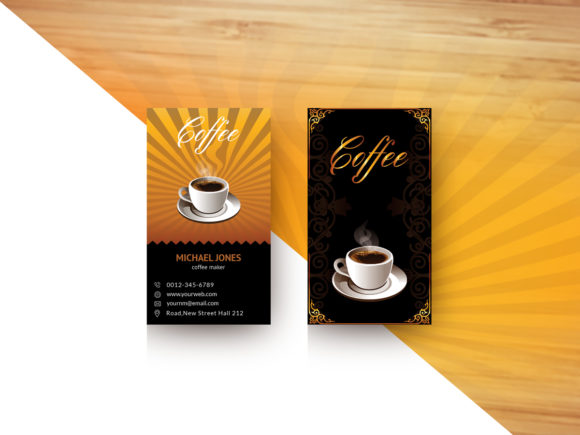
The vertical modern coffee shop business card template breaks from the traditional horizontal layout, immediately signaling a contemporary and design-forward approach. Its visual personality is clean, sophisticated, and intentionally structured. The style typically leverages ample white space, elegant typography, and subtle nods to artisanal culture—think muted earth tones, refined line art, or minimalist coffee-related iconography used as a design accent rather than a literal illustration. The overall appeal lies in its versatility; it feels at home in the hands of a graphic designer meeting a new client, an illustrator networking at an art fair, or a gallery owner exchanging details with a collector.
This design direction influences more than just aesthetics. The vertical orientation naturally guides the eye down the card, creating a clear visual hierarchy. Typically, the top section might feature a bold name or logo, followed by a tagline or specialty, and concluding with contact details at the bottom. This flow makes information digestible and memorable. For a creative business, this structure ensures your name and artistic focus are immediately prominent, which is crucial for brand recognition in a competitive market.
Where This Design Truly Shines
The strength of a Coffee Shop Business Cards template like this is its adaptability across the creative spectrum. For an illustrator or painter, the clean backdrop doesn't compete with the need to potentially add a small, impactful detail from their work—perhaps a signature flourish or a tiny motif that defines their style. A graphic designer or brand strategist can use the template's inherent balance to demonstrate their understanding of layout and typography, showcasing their skills in a tangible format.
For those in related creative fields—publishers, content creators, or art collectors—the template projects an image of curated taste and modern professionalism. It moves beyond the cliché of overly themed designs and offers a sophisticated platform for brand identity. The style works exceptionally well for packaging design businesses, editorial design studios, or even web design freelancers who want a physical artifact that complements their digital portfolio. Its modern typography ensures it feels current, whether used for logo design consultations or social media graphics project discussions.
Practical Features for a Flawless Print Outcome
Behind the appealing design lies a suite of technical features that make these templates a reliable design asset. The files are provided as layered PSD documents, granting full editability. Every element—from text and color to graphical accents—can be customized to match your specific brand palette and font choices. This level of control is essential for maintaining brand consistency across all your materials.
The templates are built for print success from the ground up. They utilize CMYK color settings, the standard for professional printing, ensuring the colors you see on screen translate accurately to the final product. With a resolution of 300 DPI (dots per inch), they meet the industry requirement for sharp, high-quality output, eliminating any risk of pixelation or blurriness. The dimensions are set to the standard 2 x 3.5 inches, including a crucial 0.25-inch bleed area. This bleed is the extra margin that printers require to account for slight cutting variations, guaranteeing your design extends cleanly to the edge of the card with no unwanted white borders.
Making the Template Your Own: A Step-by-Step Guide
Adopting a premium font template is straightforward with a bit of preparation. First, gather your brand assets: your logo (in vector format if possible), your exact brand color codes (HEX for web, CMYK for print), and your preferred typography. The templates include a free font, but you can substitute this with your own serif font, sans serif font, or even a script font that better represents your artistic voice. Consider font pairing—using a bold, clean sans serif for your name and a complementary serif for contact details can enhance readability and hierarchy.
When editing, prioritize clarity. Your name or business name should be the most prominent text element. Your title or specialty (e.g., "Visual Artist," "Brand Identity Designer") should be clear but secondary. Contact information—phone, email, website, social media handle—must be easy to read at a glance. Avoid overcrowding. The modern design's strength is its breathing room; use it to let your key information stand out.
Before sending to a printer, always request a physical proof. This allows you to check color accuracy, paper weight, and finish (matte or glossy) to ensure the final product feels as good as it looks. Remember, the mockup images displaying the templates are for visualization only; the actual deliverable is the editable, print-ready file.
Elevating Your Brand Through Thoughtful Design
Choosing a business card template is a strategic branding decision. A vertical modern coffee shop business card does more than share your details; it communicates your values. It says you appreciate modern typography, that you value clean and effective design, and that you understand the importance of a cohesive brand identity. This consistency builds recognition—when a client sees your card, website, and social media graphics all sharing the same visual language, trust and professionalism are reinforced.
For creatives, this alignment between your work and your marketing materials is non-negotiable. Your card should be an ambassador for your aesthetic. By starting with a well-crafted, technically sound template, you save time on the foundational layout and can invest your creative energy into the custom details that make the card uniquely yours. It’s a practical tool that respects both the art of design and the science of print production, ensuring you make a lasting, professional impression every time you network.